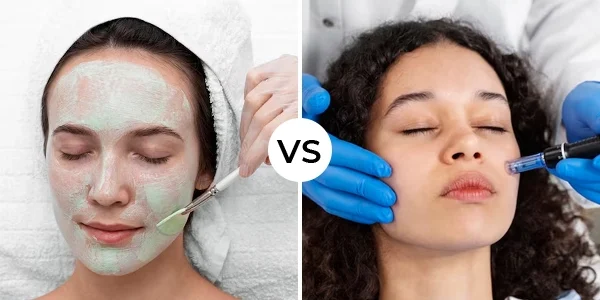
Choosing between a Chemical Peel Nyc and microneedling can feel confusing. Both treatments are popular, both improve skin quality, and promise visible results. The problem is that they work in very different ways, and choosing the wrong one can slow your progress or cause unnecessary irritation.
Skin treatments are not one-size-fits-all. Your skin type, concern, downtime tolerance, and treatment history all matter. What works beautifully for pigmentation may do very little for acne scars, and vice versa.
This guide shows the real differences between chemical peels and microneedling. It explains who each treatment suits best and helps you choose the option that matches your skin goals, not just the latest trends.
Chemical Peel vs. Microneedling: What’s the Core Difference?
The fundamental difference lies in “Chemical vs. Mechanical” action. Chemical peels use acidic solutions to dissolve the “glue” holding dead skin cells together, causing the surface layer to shed. Microneedling uses sterilized micro needles to create microscopic punctures, triggering the body’s internal wound-healing response.
- Skin-Biology Level: Peels work from the “outside in” by exfoliating the epidermis. Microneedling works from the “inside out” by stimulating the fibroblasts that produce collagen and elastin.
- The Confusion: Both treatments can improve brightness and texture, which is why they are often grouped together.
- The Outperformer: If you have active surface pigment, a peel wins. If you have structural issues like deep scarring or sagging, microneedling is the superior choice.
What Is a Chemical Peel and What Does It Treat Best?
A chemical peel is designed to improve skin tone, clarity, and texture by removing dead or damaged skin cells. Professional peels are customized by strength and formulation based on your skin type and concerns. Chemical peels are especially effective for:
- Hyperpigmentation and sun damage
- Acne and post-acne marks
- Uneven skin tone
- Dull or rough texture
- Early fine lines
Clients seeking chemical peel in NYC treatments often want brighter, smoother skin with minimal sessions. Light to medium peels can deliver noticeable results with controlled downtime when performed by a licensed professional. For patients looking for a Chemical peel option, proper customization is critical, especially for sensitive or melanin-rich skin tones.
What Is Microneedling and When Is It the Better Option?
Microneedling is preferred for structural skin repair. It focuses on remodeling the skin from within by boosting natural collagen production, making it the ultimate tool for “bouncy,” firm skin.
- Collagen Stimulation: The micro-injuries “trick” the skin into thinking it’s injured, forcing it to produce new, organized collagen fibers.
- Depth Advantage: Unlike peels, needles can reach the deeper dermis where scars and wrinkles live.
- Healing Timeline: 24–48 hours of redness (similar to a sunburn), with no actual “peeling” of the skin.
- Ideal Candidate: Those dealing with “pitted” acne scars, enlarged pores, or loss of elasticity.
When comparing microneedling to surface treatments, it is clearly the better choice for those focused on long-term anti-aging and skin thickness.
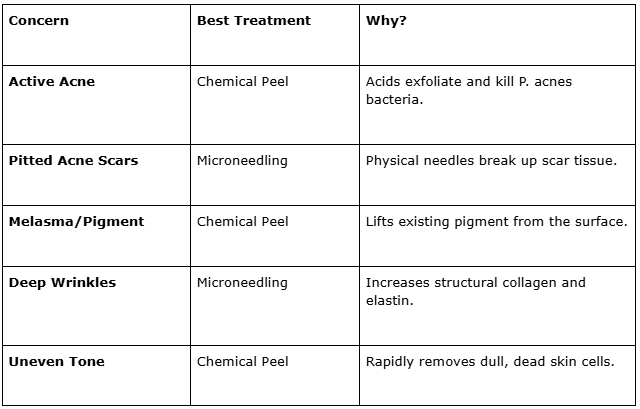
Chemical Peel vs. Microneedling for Acne, Scars, and Pigmentation
When targeting specific skin concerns, treatment choice depends on what your skin needs most. Chemical peels help calm breakouts and brighten discoloration, while microneedling improves texture by softening uneven areas left by past acne.
Downtime, Healing, and Side Effects: What to Expect
The “social downtime” varies significantly between the two. Chemical peels often involve 3–5 days where your skin may visibly flake or peel in sheets. Microneedling usually results in a flushed, red appearance for about 24 hours, but the skin remains intact.
- Normal Side Effects: Redness, tightness, and minor swelling are standard for both.
- The “No-Go” Zone: You must avoid direct sun exposure after both treatments to prevent post-inflammatory hyperpigmentation.
- Professional Aftercare: Using a medical-grade barrier cream is non-negotiable to ensure the skin heals without scarring.
Which Treatment Is Safer for Sensitive or Darker Skin Tones?
Both treatments can be safe for sensitive and darker skin tones when performed correctly. The key is not the treatment itself, but how it is customized for your skin. With the right approach, both microneedling and a chemical peel in NYC can deliver visible results without increasing risk.
For deeper skin tones, skilled providers adjust the strength of peels and the depth of microneedling. This protects the skin barrier and helps with even healing. Proper skin preparation and aftercare help maintain clarity and reduce the chance of pigmentation concerns.
This is why a professional skin assessment always comes first. Understanding your skin type allows both microneedling and chemical peel treatments to be performed safely, comfortably, and effectively for long-term skin health.
Can You Combine Chemical Peels and Microneedling?
Yes, chemical peels and microneedling can be combined safely when planned correctly. Many advanced skin programs alternate between the two treatments rather than doing both at once. A chemical peel in Queens helps refresh the surface while keeping the skin balanced and calm.
These treatments are usually spaced about two to four weeks apart. The peel improves tone and pigmentation on the surface, while microneedling works deeper to support collagen and firmness. Together, they create gradual, visible skin improvement without overwhelming your skin.
How to Choose Between Chemical Peel and Microneedling in NYC
In a fast-paced environment like NYC, your choice often comes down to your schedule and your specific skin “pain point.”
- Choose a Chemical Peel if: You have an event in two weeks and want a bright, even-toned “glow,” or you are fighting active breakouts.
- Choose Microneedling if: You are playing the long game to fix deep texture, scars, or “crepey” skin.
Ultimately, the best Chemical Peel vs. Microneedling in NYC results come from a customized plan. A licensed professional can look at your skin under magnification to see what the naked eye cannot.
Achieve Your Best Skin Yet
No two complexions are identical. The most effective results aren’t found in a “one-size-fits-all” menu, but in a bespoke strategy that respects your skin’s unique barrier and history. At Karmina Beauty Clinic, we prioritize clinical safety and precision over fleeting trends.
Ready to stop guessing? Whether you need the resurfacing power of a peel or the collagen-boosting magic of needles, our experts are here to guide you. Book your consultation at Karmina Beauty Clinic today and let’s design your personalized path to radiant skin.
FAQs
Is a chemical peel or microneedling better for acne scars?
Microneedling is generally superior for “pitted” or depressed acne scars as it stimulates collagen to fill the indentations, whereas peels focus on surface stains.
How many sessions do I need for visible results?
Most patients see a difference after one session, but a series of 3–6 treatments is recommended for transformative results in both cases.
Which treatment has less downtime?
Microneedling typically has less “social” downtime; redness fades in 24–48 hours, while peels can cause visible skin shedding for up to a week.
Can chemical peels damage my skin?
When performed by a licensed professional using the correct acid for your skin type, peels are safe. Damage only occurs with improper application or DIY attempts.
Is microneedling painful?
A topical numbing cream is used first. This makes the feeling more like light sandpaper or a gentle tickle instead of pain.
Can I wear makeup after these treatments?
For microneedling, wait at least 24 hours to let the micro-channels close. For peels, wait until the active peeling phase has subsided to avoid irritation.
Which treatment is better for anti-aging?
Microneedling is great for “internal” anti-aging, like firmness and wrinkles. Peels work better for “external” anti-aging, such as age spots and radiance.
How do I know which treatment my skin actually needs?
A professional consultation is the best way to understand your skin’s needs. It considers texture, pigment depth, and sensitivity levels.