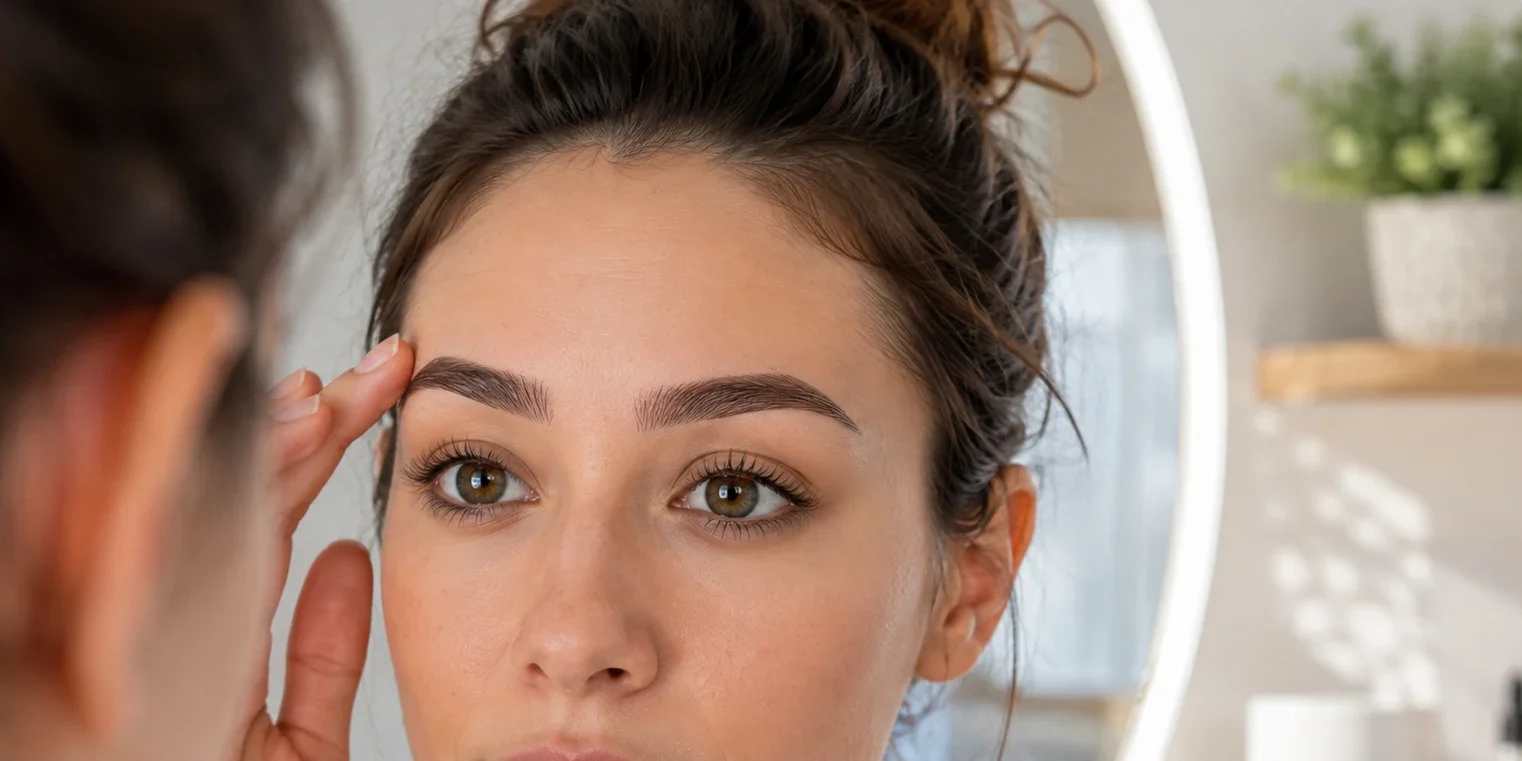
The microblading healing process is not just about keeping your brows dry for a week. Weather affects your healing time. Humidity, sunlight, and winter dryness all matter. They influence how long your brows take to heal, how much pigment stays, and if you need a touch-up sooner. Most clients focus on aftercare products but overlook the environment they are healing in. That is a costly mistake.
Understanding how seasons and climate impact microblading healing can help you choose the best time for your appointment. This ensures your results last the full 12 to 18 months.
Does Humidity Affect How Microblading Heals?
Yes. High humidity is one of the biggest threats to the microblading healing process. When the air is humid, your skin sweats more easily, even when you are not exercising. That sweat sits on fresh microbladed tissue and pushes pigment out of the micro-channels in your skin before it has bonded properly. The result is patchy, uneven brows that fade faster and require earlier touch-ups.
Does humidity affect microblading healing even indoors?
Yes. NYC summers regularly hit 70 to 80 % relative humidity indoors without air conditioning. If your home or office runs warm, your skin is sweating during the critical first 10 days when pigment retention is being established.
The first seven days are when pigment bonds to the dermis. Moisture from sweat or humidity during this time can dilute the pigment. This may cause it to migrate or fade unevenly. This is why so many clients report their summer microblading fading faster than their friends who got treated in October.
NYC Humidity Note: Forest Hills and Queens generally run 65 to 78 percent humidity from June through August. If you are planning microblading in NYC during summer, make sure your recovery space is air-conditioned, and your pillowcase stays dry. Sweat and healing do not mix well in the first two weeks.
Sun Exposure After Microblading: Why It Matters More Than You Think
Sun exposure after microblading can seriously damage your new brows. Many people don’t realize how fast UV rays can fade the pigment. UV radiation breaks down iron oxide molecules in microblading pigment. This causes the color to change. Black pigment can turn orange-brown. Cool-toned pigments can turn reddish. This is not a brand issue or a technique issue. It is a photochemical reaction.
Why do you need to avoid the sun after microblading?
Just 10 to 15 minutes of direct sun exposure in the first four weeks speeds up pigment breakdown. This leads to uneven color fading. Your brows may look great at your two-week check-in but look washed out by week six if you spent time outdoors without protection.
How long to avoid the sun after microblading is a common question. Avoid direct sun for at least four weeks. After that, use SPF 30 or higher on the brow area every day, for as long as needed. Using SPF for eyebrows specifically formulated for the face keeps your results lasting closer to 18 months rather than 12.
UV exposure is cumulative. Walking to the subway, sitting near a window, or running errands adds up. Daily application of mineral SPF after healing is the best habit for keeping pigment long-term.
How Does Cold Weather Change Microblading Healing Time?
Cold, dry air slows skin cell turnover, thickens the outer layer of skin, and reduces blood flow to the surface. This can extend your healing timeline by a few days and increase the intensity of the microblading peeling process. Thick, dry scabs form more easily in winter, and the temptation to pick them is real.
How to Protect Microbladed Eyebrows in Cold Weather
Winter brings low humidity, indoor heating systems, and cold wind, all of which dry out healing skin. Here is what works:
- Apply a thin layer of the recommended aftercare balm twice daily to prevent the skin from drying and cracking around brow scabs.
- Avoid direct contact with scarves or hats that rub against the brow area, causing premature scab removal.
- Keep indoor heating at a moderate temperature. Extremely dry indoor air in winter worsens brow scabbing.
- Drink more water. Hydrated skin heals more evenly and retains pigment better than dehydrated skin.
Winter vs. Summer Microblading: Which Season Heals Better?
Fall and early winter consistently produce the best healing outcomes in NYC. Lower humidity reduces sweat interference with pigment bonding. Less UV intensity means less risk of color breakdown. Cooler temperatures keep skin sensitivity lower and reduce inflammation. Summer is the hardest season for microblading to heal well, primarily because of heat, sweat, and UV exposure combining simultaneously.
Microblading Healing Process Day by Day: What Weather Does at Each Stage
The microblading healing process day by day follows predictable stages, and weather affects each one differently.
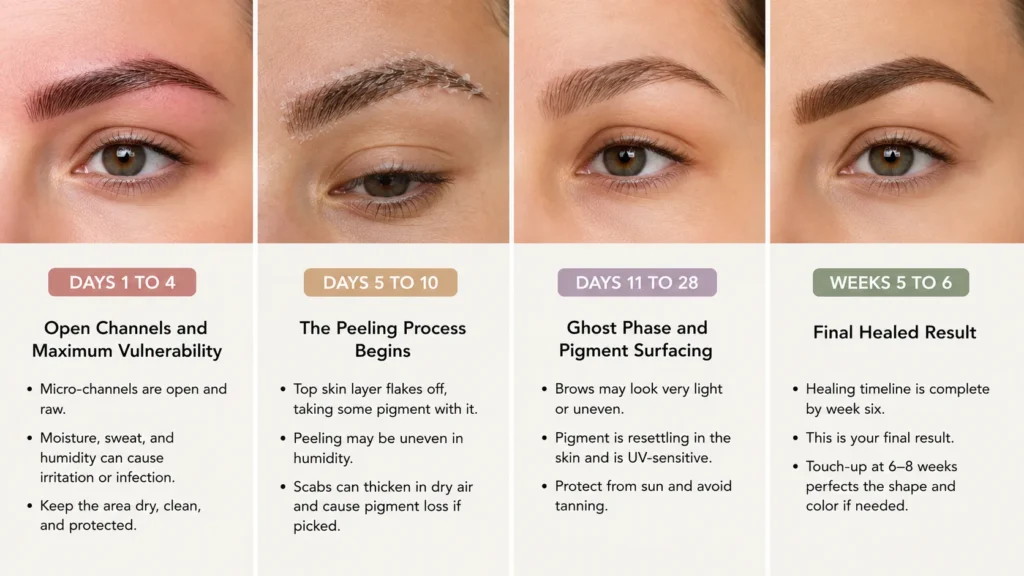
Days 1 to 4: Open Channels and Maximum Vulnerability
The micro-channels from the blade are open. Any moisture, including sweat from humidity, directly contacts raw tissue. Keep this window as dry and controlled as possible. In summer, this means staying in air-conditioned spaces for the entire period.
Days 5 to 10: The Microblading Peeling Process Begins
Microblading healing stages include a peeling phase where the top layer of skin flakes off, taking some surface pigment with it. In high humidity, this phase can be irregular, with some areas peeling faster than others. In very dry winter air, scabs can thicken and crack, increasing the risk of pigment loss if they are removed too early.
Days 11 to 28: Ghost Phase and Pigment Surfacing
Brows may look lighter or almost invisible. This is normal. UV exposure during this phase is especially harmful because the pigment is resettling in the dermis and is highly vulnerable to photodegradation. Stay out of direct sun, and once the skin has fully closed and healed, apply SPF around the brows daily.
Weeks 5 to 6: Final Healed Result
By week six, the microblading healing timeline is complete. What you see now is the result you will maintain. If weather-related pigment loss occurred, a touch-up at the 6 to 8 week mark corrects it.
Can I Get Microblading Done in the Summer Heat?
You can get microblading in summer with proper aftercare. Protect the area from sweat, sun, heat, and humidity for the first 10 days to support smooth healing and beautiful, long lasting results.
Summer microblading in NYC is absolutely possible. It just demands more commitment from you during the healing window. Clients who follow aftercare for microblading precisely in summer see results as strong as clients who heal in fall. Results depend on how rigorously you protect the healing skin, not the season itself.
Seasonal Healing Risk Index for NYC Microblading
| Season | Primary Risk | Pigment Retention | Healing Difficulty |
| Summer (Jun–Aug) | Humidity, sweat, UV | Lower without strict AC | HIGH |
| Fall (Sep–Nov) | Minimal UV shift | Best pigment bonding conditions | LOW |
| Winter (Dec–Feb) | Dry air, scab cracking | Good with balm discipline | MEDIUM |
| Spring (Mar–May) | Rising humidity by week 2 | Strong if booked early spring | LOW |
What Happens If Microblading Gets Wet While Healing?
Water, whether from rain, sweat, or steam, enters the micro-channels and dilutes the pigment before it has fully bonded to the dermal layer. The result is patchy areas, faster fading, and uneven color. This is why the first 7 to 10 days of aftercare for microblading strictly require keeping brows completely dry.
In humid NYC summers, even sleeping without air conditioning can be enough moisture to affect results. A fan blowing on your face at night helps. A cool room is key too. Also, keep your face away from steam while cooking or showering.
Does the Season You Get Microblading Affect How Long It Lasts?
Yes. The season you choose for microblading can influence how well your brows heal and how long the pigment lasts. At Karmina Beauty Clinic, Karmina Laku recommends planning treatments around your lifestyle and committing to proper aftercare for the best results.
- Licensed Esthetician in New York
- Licensed Tattoo Artist in NYC and Florida
- European Brow Mapping Technique
- Cherry Financing Available
- 5-Star Rated Beauty Clinic in Forest Hills
While skin type, skincare products, and sun exposure all affect longevity, the healing period is the most important. We offer personalized aftercare tips. This helps clients get beautiful, natural-looking brows that last longer, no matter the season. Not sure if microblading is the right fit for your routine? See how it compares to brow lamination in cost, upkeep, and results.
Ready for Brows That Last? Book at Karmina Beauty Clinic NYC
Weather is not something most microblading guides cover in depth, but it is one of the highest-impact variables in how well your results hold. The microblading healing process is a natural event in your skin. Your environment greatly affects how it unfolds. Choose your season thoughtfully, protect your brows from UV and moisture, and follow your aftercare instructions without compromise.
Karmina Beauty Clinic serves clients in Forest Hills, Queens, and across NYC. Microblading costs $495 for a 2-hour session. You’ll get personalized aftercare tips based on your skin type and the season. Financing available from $19 per month through Cherry.
Book Your Microblading Session
Frequently Asked Questions
Q1. Does humidity affect microblading healing?
Yes. High humidity causes sweat that pushes pigment out of healing skin before it bonds properly.
Q2. How long to avoid the sun after microblading?
Avoid direct sun exposure for four full weeks, then apply mineral SPF 30 around the brow area daily.
Q3. Why no alcohol before microblading?
Alcohol thins blood and raises skin permeability, causing excess bleeding that dilutes pigment retention during the procedure.
Q4. How to protect microbladed eyebrows in cold weather?
Apply aftercare balm twice daily and use a humidifier at night to prevent brow scabbing from cracking.
Q5. What is the microblading healing process day by day?
Days 1 to 3 are most vulnerable, the microblading peeling process starts by day 4, and full healing completes around week six.
Q6. What happens if microblading gets wet while healing?
Water dilutes pigment before bonding, causing faded or blurry strokes in the healed microblading healing stages.
Q7. What is the microblading cost at Karmina Beauty Clinic?
Microblading NYC at Karmina starts at $495 for a full 2-hour session, with financing from $19 per month.
Q8. Why is summer the hardest season to heal microblading?
Heat, humidity, and UV peak simultaneously, creating triple interference with pigment retention during the first critical weeks.
Q9. Does the season affect how long microblading lasts?
Yes. Fall and winter healing with consistent SPF for eyebrows use produces results lasting closer to 18 months.
Q10. What is the best aftercare for microblading in humid weather?
Stay in air-conditioned spaces, blot sweat immediately, avoid UV exposure, and follow your written aftercare instructions precisely.