The microblading cost question is usually the first thing people ask. Then comes a second question that nobody thinks about until after the appointment: what happens when the results start to fade? To make a smart choice, grasp the full picture. This includes the initial microblading nyc price, the touch-up timeline, the healing stages, and the long-term costs. Understanding these factors helps you achieve lasting results.
This guide covers everything about microblading eyebrows in plain language. No jargon, no sales pressure. Just the facts you need before you book.
What Is Microblading and How Long Does It Last
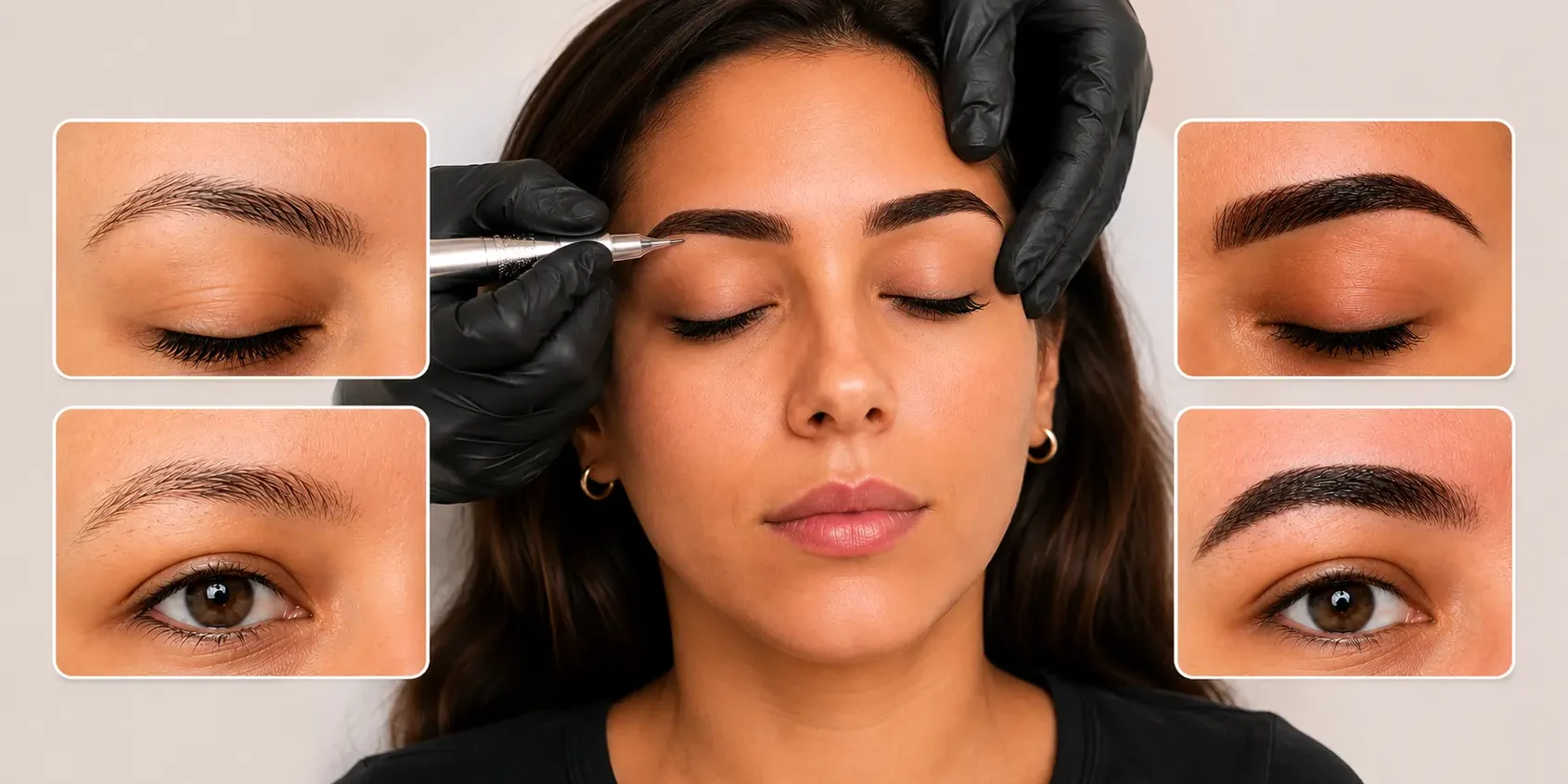
Microblading is a semi-permanent eyebrow technique. A trained artist uses a fine, handheld tool to deposit pigment into the upper layers of skin in hair-like strokes. The result is fuller, shaped brows that look natural.
How long microbladed eyebrows last depends on a few things. For most people, results hold well for 12 to 18 months. Oily skin types tend to see fading sooner, around 10 to 12 months. Drier skin types can stretch closer to 18 to 24 months before needing a refresh.
Good to Know: Microblading is not a tattoo. The pigment sits in the skin’s upper dermal layer and naturally breaks down over time. This is what makes semi-permanent eyebrows different from traditional cosmetic tattooing, and it is why annual touch-ups are part of the process.
Average Cost of Microblading Eyebrows in the US 2026
Here is what you should actually expect to pay in 2026. These ranges are based on current US market pricing and vary by location, artist experience, and what each studio includes in their service.
| Session Type | Typical Price Range (US 2026) |
| Initial Session (First Appointment) | $400 to $800 in most markets. High-end studios in NYC, LA, Miami can reach $900 to $1,200 |
| 6 to 8 Week Touch-Up (First Refresh) | $100 to $250. Some studios include this in the initial price so always ask before you book |
| Annual Touch-Up (12 to 18 Month Refresh) | $250 to $500. Usually 50 to 60 percent of the original session price |
| Touch-Up After 2 or More Years | $375 to $700. Closer to a full session since significant work is needed |
| Microblading Touch-Up Cost (General) | $100 to $500 depending on how long since your last session |
| First Year All-In Cost | $500 to $1,000 including initial session plus 6 to 8 week touch-up |
How much does it cost to get your eyebrows microbladed when you factor in long-term maintenance? If your first session costs $550 and you do an annual refresh at $200, your three-year total works out to roughly $38 per month. That is less than most people spend on brow pencils and salon visits combined.
Does Microblading Fade and Why Does It Happen
Yes, microblading does fade, and that is completely normal. The pigment is designed to break down gradually so it does not look outdated as your face changes with age. Several things speed up or slow down this process.
- Skin type matters most. Oily skin pushes pigment out faster than dry skin
- Sun exposure is a major fading trigger. UV rays break down pigment faster than almost anything else
- Skincare products with retinol, glycolic acid, or exfoliants accelerate fading around the brow area
- Aftercare in the first 14 days is critical. What you do immediately after your appointment directly affects how long color holds
- Swimming and sweating before the skin has fully healed can pull pigment out before it sets
How to Prevent Microblading from Fading Too Fast
Wear SPF daily. Avoid exfoliants near the brow area. Skip swimming and intense exercise for at least 10 days after any session. Follow your artist’s aftercare instructions closely. Don’t skip your 6- to 8-week touch-up; this appointment secures the pigment well.
Microblading Healing Process: What to Expect Day by Day
The microblading healing process is often a surprise for first-timers. Your brows will not look perfect for several weeks and that is normal. Here is what the microblading touch-up healing process day by day actually looks like.
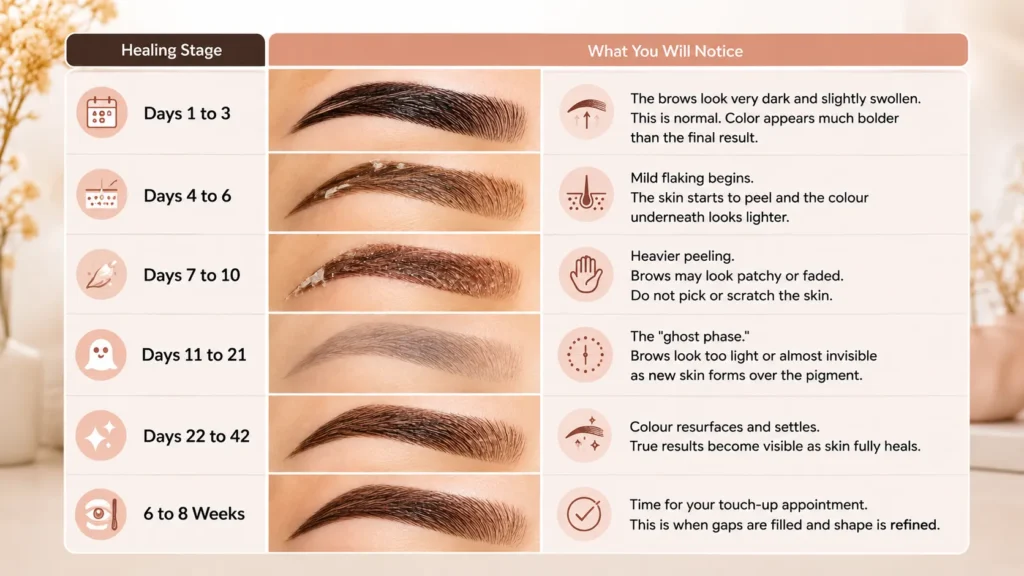
| Healing Stage | What You Will Notice |
| Days 1 to 3 | The brows look very dark and slightly swollen. This is normal. Color appears much bolder than the final result |
| Days 4 to 6 | Mild flaking begins. The skin starts to peel and the colour underneath looks lighter |
| Days 7 to 10 | Heavier peeling. Brows may look patchy or faded. Do not pick or scratch the skin |
| Days 11 to 21 | The “ghost phase.” Brows look too light or almost invisible as new skin forms over the pigment |
| Days 22 to 42 | Colour resurfaces and settles. True results become visible as skin fully heals |
| 6 to 8 Weeks | Time for your touch-up appointment. This is when gaps are filled and shape is refined |
The microblading healing stages are the reason you should never judge results in the first two weeks. Most people who say microblading did not work for them skipped their touch-up or did not follow aftercare properly during this window.
Eyebrow Microblading Aftercare Day by Day
Good microblading aftercare is not complicated, but it is non-negotiable. What you do in the first 10 days directly determines how the pigment holds and how long your results last.
- Keep brows completely dry for 7 to 10 days after any microblading or touch-up session
- Do not apply makeup, creams, or sunscreen directly on the brows until healed
- Skip workouts and activities that cause heavy sweating for at least 10 days
- Stay out of pools, saunas, and steam rooms during the full healing period
- Sleep on your back if possible to avoid friction on freshly treated brows
- Apply the aftercare ointment your artist provides in thin layers only
- Never pick, peel, or rub the skin no matter how tempted you are during the flaking phase
Think of eyebrow microblading aftercare day by day as protecting an investment. Skipping steps during healing is the most common reason people need earlier touch-ups or end up with uneven results.
Can You Microblade Over Old Microblading
Yes. In most cases, you can microblade over old microblading, but there are important conditions. If previous work has faded significantly and the skin has fully healed, a trained artist can work over it to refresh or adjust the shape and color. If old pigment is still dark or has turned an unnatural tone, the artist needs to assess whether correction work is needed first.
This is one situation where artist experience matters most. Layering pigment over existing work requires a skilled hand. Attempting this with an inexperienced artist can result in muddy color or uneven strokes that are very difficult to fix. When comparing permanent makeup vs microblading, one clear benefit of microblading is its gradual fade. This makes future touch-ups and corrections easier than with sharp-edged cosmetic tattoos.
Is Microblading Still Popular in 2026 and Is It Safe
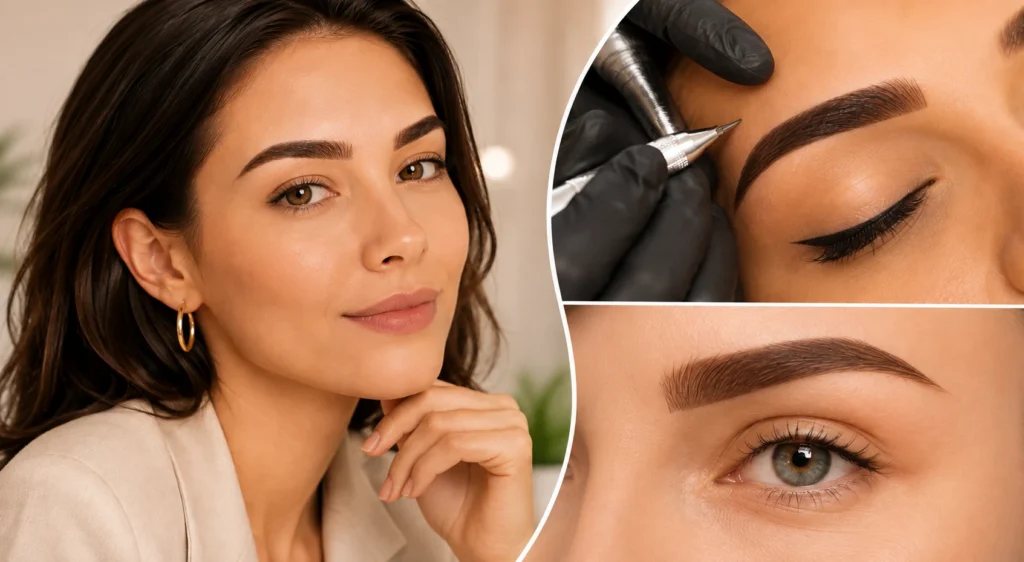
Microblading remains one of the most requested semi-permanent beauty treatments globally in 2026. Microblading trends 2026 show growing interest in more natural, low-maintenance looks, which is exactly what microblading delivers when done well.
Microblading vs nano brows is a common comparison right now. Nano brows use a digital machine rather than a manual blade, which can produce finer strokes and may last slightly longer. Both techniques are popular, and the right choice depends on your skin type and the look you want.
Is microblading safe?
Yes, when performed by a licensed professional in a clean environment using sterile equipment. Risks increase significantly with unlicensed artists or poor hygiene practices. Always verify credentials and ask to see a portfolio of healed results, not just fresh work.
Key benefits of microblading:
- Restores Hair Loss: Helps individuals with alopecia, over-plucking, or medical treatment-related thinning.
- Boosts Confidence: Rebuilds natural-looking brow structure and self-esteem.
- Gaining Popularity for Men: Offers subtle, natural brow definition tailored for male clients.
- Beyond Aesthetics: Delivers functional, life-enhancing results alongside cosmetic improvements.
Microblading is a long-term investment in both confidence and time saved. Understanding the full microblading cost, the healing process, and what touch-ups actually involve puts you in control of the decision. The best results come from picking an experienced artist, doing proper aftercare, and always getting that first 6- to 8-week touch-up.
Ready for Natural, Long-Lasting Brows?
Book your microblading consultation at Karmina Beauty Clinic in Forest Hills, Queens. We provide expert results that are fully customized to your face.
Frequently Asked Questions
Q1. What is the cost of microblading eyebrows in the US in 2026?
The average cost of microblading eyebrows in the US in 2026 is $400 to $800 for your initial session, depending on location and artist experience.
Q2. How long does microblading eyebrows last on average?
Microblading eyebrows typically lasts 12 to 18 months. Oily skin may see fading closer to 10 to 12 months with proper aftercare.
Q3. What happens during the microblading touch-up healing process?
Brows darken, peel, and temporarily fade during weeks one and two. Full color settles between weeks four and six after treatment.
Q4. How much does a microblading touch-up cost separately?
Microblading touch-up cost typically ranges from $100 to $500 depending on how long since your last session and location.
Q5. Do microbladed eyebrows fade completely over time?
Yes, microblading does fade gradually over 12 to 24 months. Sun exposure, oily skin, and skipping aftercare speed up this process significantly.
Q6. What to expect after microblading in the first week?
Expect darker brows, mild swelling, then flaking and peeling between days four and ten. This is the normal microblading healing process.
Q7. Is microblading before and after healing very different?
Yes, significantly. Fresh microblading looks darker and bolder. Healed results are softer, more natural, and represent the true final outcome.
Q8. How much does it cost to get your eyebrows microbladed at a top NYC clinic?
At Karmina Beauty Clinic in Forest Hills, NYC, microblading is priced at $495 for a two-hour session, including a full consultation and aftercare guidance.